Introduction
Locked Pandora box
I observe that the hidden often means secret, shadowed and mysterious to many people. In this case, something hidden usually creates fear of unknown and distrust. As a result, it often leads to an obsession of openness, transparency, classifications and constant verifications. I don’t think that it makes things more clear and accessible. A demand creates an offer: new ways of going beyond the rules of transparency to new levels of hidden. New identities for the same person, material and spiritual, temporary anonymous access and avatars, new cryptography ways and new digital territories. And then new rules and new alliances, new secrets.
It seems that this kind of obsession for transparency and constant check-in is coming again as it often comes with historical and technological cycles.
However, it seems to me that the dualism of hidden and opened has been existed for many eras: the sun and the moon, God and Evil, I and shadow, light and dark. The obsession for transparency, control and verification often rises repressions and classifications. By doing so, doesn’t this transparency create more hidden in mind, in words, in acts? By making more light, doesn’t it extend shadows? And by the way, light itself has different forms.
Transparency is not clarity. Transparency may be turbid in its way of organizing and managing.
Transparency may be disorganic and dysfunction.
Hidden may seem so because of the lack of value or the lack of application in use.
Hidden may look secret because of some shadowed traits, characteristics, the underground and unseen development.
I think that information has its own circle of life for everybody and everything. I mentioned in the overview post that to my mind, nothing is hidden. It’s more about a tunnel thinking, different perceptions of reality and the question of value. What is a current interest in the current situation? What is a goal and an appropriate action to get it? That kind of questions highlights the relativity of information itself, because these questions apply it directly to the current situation, to the concrete person and to the available decisions.
In this case, some classification or a score is an application of concrete characteristics to the concrete goals of the concrete interests at that time. This point of view gives openness and fluidity in dealing with information, persons, id and data without blocking them into categories. And this method of analysis is based on different states of the same information, different perceptions of reality, different values in time, different goals and illusions.
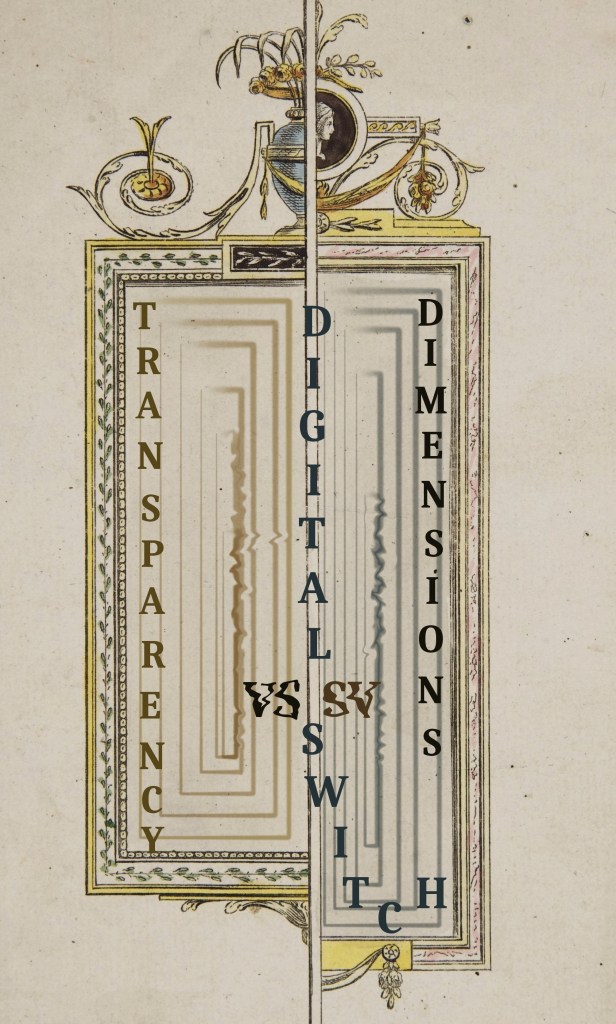
This is the reason I’d rather speak about dimensions and states of information then about its transparency and its classifications.
In case of dimensions, I will focus on opening gates to new dimensions, new meanings and new goals.
I explore the switch from centralization to partial decentralization; from fixed classification to fluid states of information.
It’s not about transparent data but about multidimensional information.
Subscribe to get access
Read more of this content when you subscribe today.
 Hermenaria